Independent Nutritional Testing Results
We sent samples of our chicken to two different labs for nutritional testing. The results? Our chicken really is exceptional.
Why We Tested Our Chicken
We wanted to know if our chicken was really as great as we thought it was. So in the fall of 2025 we sent samples of our chicken to two different labs for nutritional testing.
Results in a nutshell
At the bottom of this page you can find the full reports with all the numbers—but if you aren’t so familiar with technical speak, here are the results in plain language:
- Compared to conventionally raised chicken, our chicken is less inflammatory because of ~7× more balanced omega ratios.
- Our chicken also supports the body’s ability to calm inflammation due to high levels of taurine, an amino acid involved in inflammatory signaling.
-
Due to elevated levels (between 200–900% of conventional chicken) of several amino acids,
our chicken provides increased support for:
- heart and cellular function
- immune cell metabolism
- gut cell metabolism
- energy metabolism
46% more calcium
Note: This is whole food, not a medical product. Individual outcomes depend on overall diet and lifestyle.
All values per 100g raw boneless skinless breast
| Nutrient | Willow Hedge | Conventional Broiler (USDA) | % Difference |
|---|---|---|---|
| Iron | 0.45 mg | 0.37 mg | +21% |
| Calcium | 7.3 mg | 5 mg | +46% |
| Omega-6 : Omega-3 | 2.85:1 | ~15–20:1 | ~5–7× more balanced |
| Taurine (free AA) | 1939 µg/g | ~193–260 µg/g* | 7–10× higher |
| Glutamine (free AA) | 947 µg/g | ~268–363 µg/g* | 2.6–3.5× higher |
| Serine | 777 µg/g | ~163–189 µg/g* | 3–4× higher |
| Alanine | 731 µg/g | ~195–237 µg/g* | 3–4× higher |
*Published broiler breast free amino acid ranges. Conventional data sourced from USDA SR Legacy database and published broiler breast free amino acid studies. Full references below.
What This Actually Means
Holistic farming practices do more than change how a farm looks — they change what ends up in the meat. Movement, forage diversity, and whole-grain feed influence fatty acid balance and amino acid composition. These results reflect how the birds were raised and what they were fed.
Full Lab Reports
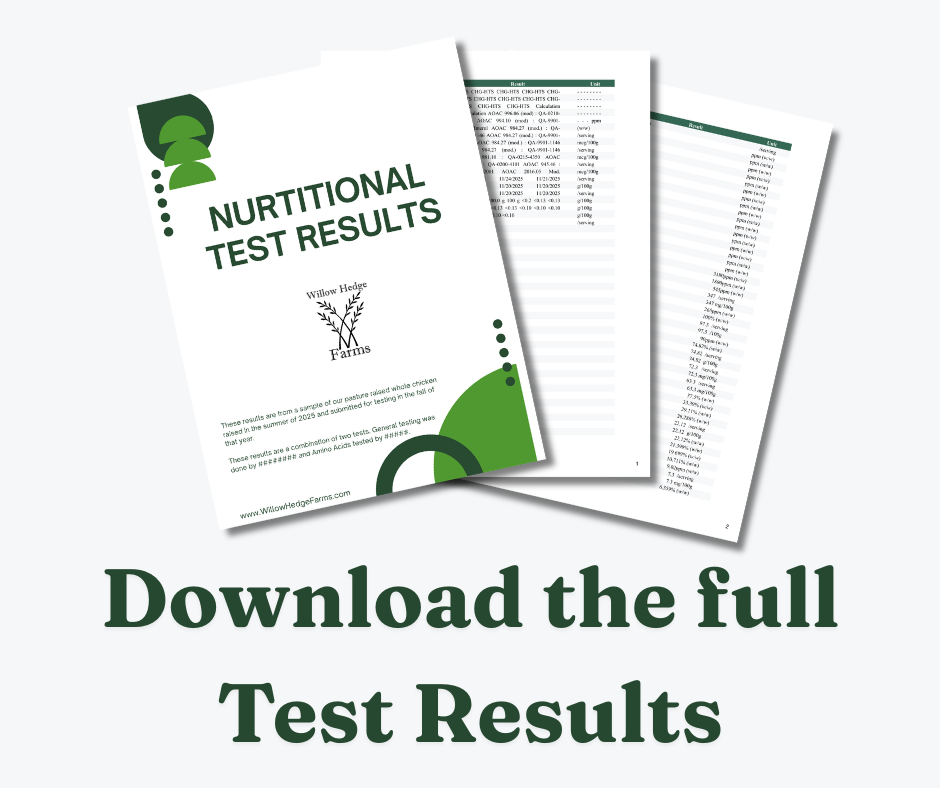
Download the full reports with all numbers for review.
- Conventional nutrient comparison: USDA SR Legacy database (and published broiler muscle studies).
- Broiler free amino acid reference paper (example): PMC7597547
- Pasture-raised omega ratio context (industry note): APPA
- Phytoestrogen content of foods of animal origin: Kuhnle, et al. (2008)
FAQs
Were these samples cherry-picked?
How often will you test?
Are these values guaranteed in every single bird?
Were the labs independent?
What exactly was tested?
Is your chicken leaner than conventional chicken?
Why measure free amino acids?
Are these results typical for pasture-raised chicken?
Why don’t grocery store labels show this information?
Do these results mean your chicken treats inflammation or disease?
Ready to Taste the Difference?
You’ve seen the numbers. Now experience the difference for yourself.